 by Jermaine
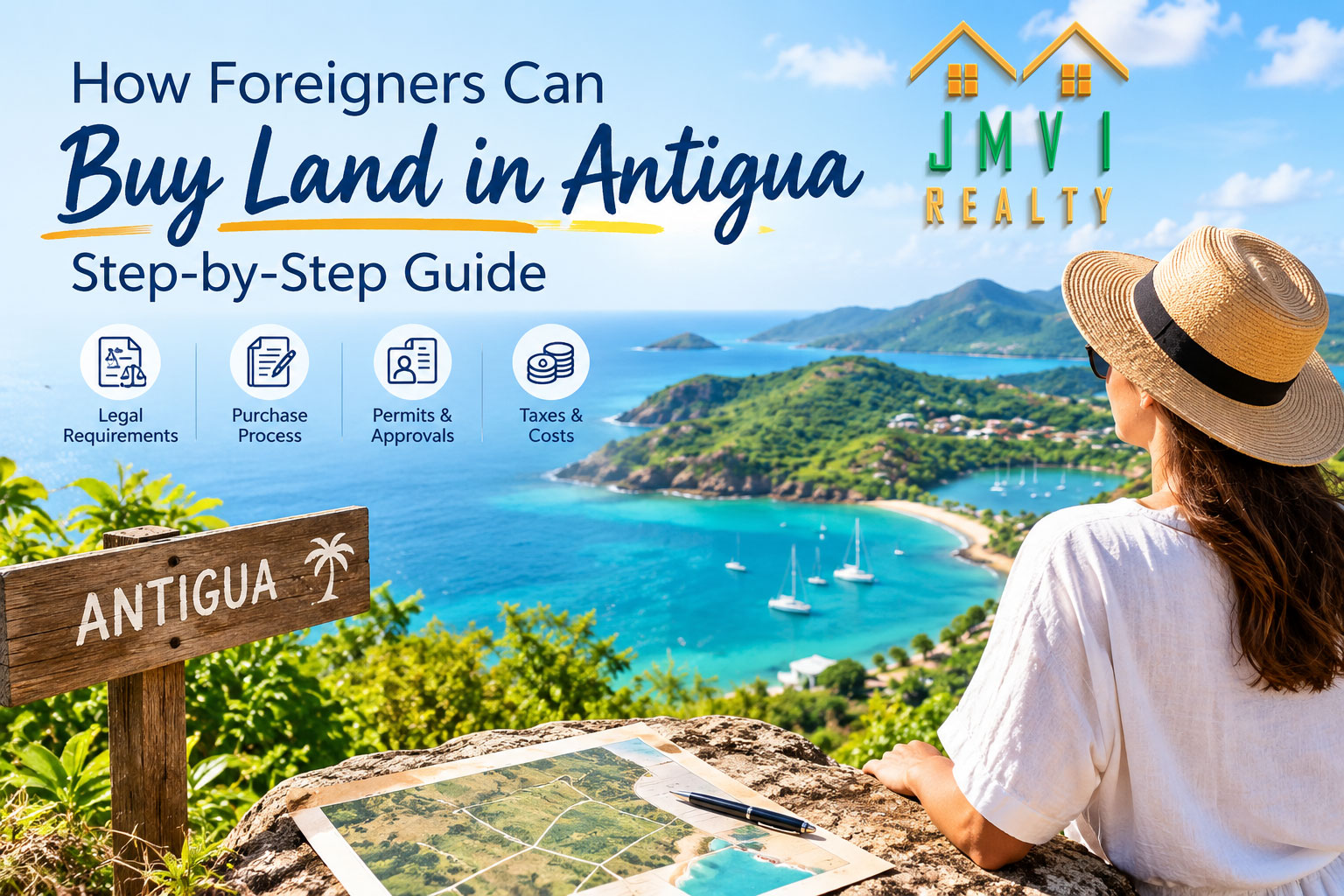
Can Foreigners Buy Land in Antigua?
Yes, foreigners can buy land in Antigua and Barbuda. International buyers can purchase private land for residential homes, holiday properties, rental investments, and commercial developments. However, foreign buyers generally need to obtain a Non-Citizen Landholding Licence before purchasing land in Antigua, subject to the applicable legal requirements.
For overseas investors considering Caribbean real estate, Antigua offers opportunities to own a tropical property, build a home, develop a rental investment, or secure land for future use. Understanding the purchasing process, legal requirements, property taxes, and ownership costs is essential before making an investment.
In this guide, JMVI Realty explains how foreigners can buy land in Antigua, what licences may be required, the costs to consider, and how to make an informed property investment.
Can a Foreigner Legally Own Land in Antigua?
Yes. Foreign nationals are permitted to purchase and own private land in Antigua, subject to the country’s property laws and applicable licensing requirements.
Antigua welcomes international property investors interested in residential, commercial, and tourism-related real estate. Buyers do not necessarily need to become Antiguan citizens or permanent residents before purchasing property.
However, foreign buyers should understand an important legal distinction: buying property in Antigua does not automatically grant residency, permanent residence, or citizenship. These are separate immigration and investment processes with their own eligibility requirements.
Foreign buyers may consider purchasing land for several purposes, including:
- Building a private residence or holiday home.
- Investing in land for potential long-term appreciation.
- Developing a villa or vacation rental property.
- Purchasing land for a commercial project.
- Securing property for future retirement or relocation.
- Investing in approved real estate developments.
Before committing to a purchase, buyers should consult an Antiguan attorney to confirm the applicable licence requirements and ensure that the property can legally be transferred into their ownership.
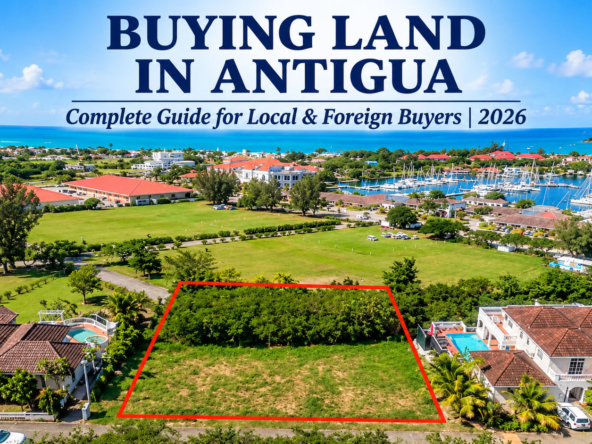
Explore Buying Land in Antigua: A Complete Guide for Local and Foreign Buyers (2026)
What Is a Non-Citizen Landholding Licence in Antigua?
A Non-Citizen Landholding Licence is a government authorisation associated with foreign ownership of land in Antigua and Barbuda.
Under the Non-Citizen Landholding Regulation Act, non-citizens purchasing land in Antigua generally need to obtain the appropriate licence. The process is intended to regulate property ownership by foreign nationals and may involve submitting personal, financial, and property-related documentation.
The exact requirements can vary depending on whether the applicant is purchasing property as an individual or through a company.
Foreign buyers should not assume that signing a purchase agreement alone gives them unrestricted ownership rights. The applicable licensing and registration requirements must be addressed as part of the legal transaction.
The Ministry of Justice and Legal Affairs provides official information and application forms for non-citizen landholding matters.
Prospective buyers can consult the official government resource here:
https://legalaffairs.gov.ag/detail_page.php?page=nonCitizensLand.php
Working with a local real estate professional and an independent Attorney can help buyers understand the requirements before committing substantial funds.
Explore Why More Buyers Are Looking for Land in Antigua in 2026
How Can Foreigners Buy Land in Antigua? Step-by-Step Process
Purchasing land in Antigua can be straightforward when the transaction is properly planned. The following steps provide an overview of the process.
Step 1: Decide What Type of Land You Want to Buy
Begin by identifying your investment objective. Are you looking for residential land to build a home, a plot near the beach, land for a rental villa, or a commercial investment?
Your intended use will influence the location, budget, planning requirements, and property characteristics you should consider.
For example, a buyer planning to build a holiday rental should investigate tourism demand, road access, utilities, and local development restrictions. Someone purchasing land for a retirement home may prioritise healthcare access, nearby amenities, privacy, and community facilities.
Explore Why Americans Are Buying Real Estate in Antigua: The Caribbean Property Trend Growing in 2026
Step 2: Choose the Right Location
Antigua offers different property opportunities depending on the location.
Popular areas to explore include:
- Jolly Harbour: Known for its marina lifestyle, holiday accommodation, and established residential community.
- Falmouth and English Harbour: Attractive to buyers interested in sailing, waterfront living, and tourism-related investment.
- Mount Pleasant: Areas to investigate for residential property opportunities and access to local amenities.
- Blue Waters and the northwestern coast: Worth exploring for buyers seeking premium residential settings and access to coastal amenities.
- Other residential and inland areas: May offer different plot sizes, budgets, and development possibilities.
These areas are examples rather than a guarantee of available land listings. Buyers should compare current properties, access, planning restrictions, and prices before selecting a location.
Step 3: Establish Your Budget
Your purchase budget should include more than the advertised land price.
Depending on the transaction, additional expenses may include:
- Non-Citizen Landholding Licence fees and associated application costs.
- Legal and conveyancing fees.
- Property valuation and survey expenses.
- Stamp duty and registration costs.
- Applicable taxes and government charges.
- Planning, architectural, and construction expenses if you intend to build.
Ask your attorney for a written estimate of the total acquisition costs before signing a binding agreement.
Step 4: Appoint an Independent Antiguan Attorney
Legal due diligence is one of the most important stages of buying land in Antigua.
Your attorney should investigate the property’s registered ownership, title history, mortgages, liens, easements, access rights, boundaries, and other restrictions that may affect the transaction.
The attorney can also explain the licensing process, prepare or review the purchase agreement, coordinate completion, and arrange the registration of the transfer.
It is advisable to appoint an attorney who represents your interests independently rather than relying solely on the seller’s representatives.
Step 5: Apply for the Required Licence
If you are purchasing land as a non-citizen, your attorney can confirm the appropriate application procedure and assist with preparing the necessary documents.
Depending on your circumstances, you may need to provide identification, details about the property, purchase information, and other supporting documentation.
Ask whether the transaction should be conditional upon receiving the necessary licence. This can help clarify what happens if approval is delayed or refused.
Step 6: Complete Due Diligence and Sign the Purchase Agreement
Before finalising the transaction, verify that the land has clear title and that its intended use is legally permissible.
A survey may be needed to confirm the plot boundaries and identify potential encroachments. You should also check whether the property has legal road access and whether electricity, water, drainage, and telecommunications are available.
If you plan to construct a building, check the applicable zoning and development requirements with the relevant authorities.
Once the necessary checks and contractual conditions are satisfied, the parties can proceed with completion and the registration of the transfer.
Step 7: Register the Property in Your Name
The final stage involves completing the transfer documents, paying the applicable charges, and registering the property in accordance with Antiguan law.
Your attorney should confirm when the transfer has been legally completed and provide the relevant registration documentation.
Keep copies of the purchase agreement, licence documents, transfer records, survey, receipts, and any planning approvals for your records.
Explore Antigua Land Prices: How Much Does It Cost to Buy Land in 2026?
How Much Does It Cost for a Foreigner to Buy Land in Antigua?
There is no single purchase price for land in Antigua. The cost depends on the location, plot size, road access, views, infrastructure, development potential, and title status.
Land close to popular beaches, marinas, established residential communities, or tourism developments may command different prices from inland or less-developed plots.
In addition to the purchase price, foreign buyers should budget for the applicable Non-Citizen Landholding Licence costs, legal fees, transfer-related taxes, registration charges, and professional services.
The final amount payable will depend on the property and the buyer’s circumstances. Buyers should obtain a transaction-specific cost breakdown rather than relying on a general estimate.
If the land is undeveloped, consider the additional cost of preparing the site, connecting utilities, obtaining planning permissions, and constructing a building.
For current opportunities and guidance on available properties, buyers can explore listings through JMVI Realty.
Can Foreigners Buy Land in Antigua for Investment?
Yes. Foreigners can purchase land in Antigua for investment purposes, subject to the applicable ownership and licensing requirements.
However, land investment should be based on careful research rather than assumptions about future price increases.
Long-Term Land Investment
Some buyers acquire land with the intention of holding it over several years. Potential returns depend on factors such as location, infrastructure improvements, development activity, demand, and the eventual resale market.
Land is not a guaranteed appreciating asset. Undeveloped plots may take time to sell, and ownership expenses can continue even when the property generates no income.
Holiday Home or Rental Development
Buyers interested in tourism-related investment may consider land for a holiday home, villa, or vacation rental.
Before proceeding, investigate local planning rules, building approvals, access, insurance availability, maintenance costs, and the expected demand for accommodation in the area.
Do not assume that purchasing land automatically gives you permission to construct a property or operate a commercial rental business.
Commercial Property Development
Investors considering shops, offices, hospitality projects, or other commercial uses should confirm the permitted land use and any additional regulatory requirements.
The Development Control Authority and other relevant government departments can provide information about applicable planning and development permissions.
Explore Buying Property in Antigua as a US, UK, or Canadian Buyer
Important Things to Check Before Buying Land in Antigua
Foreign buyers should complete the following checks before proceeding:
- Verify the title: Confirm that the seller has legal authority to transfer the property and investigate any encumbrances.
- Confirm land boundaries: Obtain a survey where appropriate and ensure that the plot matches the legal description.
- Check planning restrictions: Verify whether the land can be used for your intended residential, commercial, agricultural, or tourism purpose.
- Investigate access and utilities: Check road access, water supply, electricity, drainage, and telecommunications.
- Understand ownership costs: Ask about annual property taxes, insurance, maintenance, and any applicable taxes on undeveloped land.
- Review coastal and environmental considerations: For coastal plots, investigate setbacks, erosion risks, flooding, hurricane exposure, and relevant environmental restrictions.
- Confirm the licence requirements: Have your attorney determine which permissions apply to your particular purchase.
- Investigate the resale market: Consider future demand, development activity, comparable sales, and how easily the property might be resold.
- Be particularly careful with Barbuda: Land ownership arrangements and legal procedures can differ from those on Antigua. Recent government statements have specifically warned that purported land transactions by the Barbuda Council may not have legal effect. Buyers interested in Barbuda should obtain current legal advice and verify the authority of the seller and the status of the land before making any payment.
Final Thoughts: Buying Land in Antigua as a Foreigner
Foreigners can buy land in Antigua, making the island an option for international buyers interested in Caribbean real estate, holiday homes, retirement planning, and long-term property investment.
The key is to understand the Non-Citizen Landholding Licence requirements, choose a suitable location, verify the property’s legal status, and calculate the full cost of ownership before committing to a purchase.
With proper legal advice and careful planning, international buyers can evaluate property opportunities with greater confidence and avoid common purchasing risks.
Explore Property Opportunities with JMVI Realty
Looking to buy land or invest in property in Antigua and Barbuda? JMVI Realty can help you explore available listings and understand the local real estate market.
Visit https://www.jmvirealty.com/ to discover property opportunities and take the next step towards owning real estate in Antigua and Barbuda.
Frequently Asked Questions About Foreign Land Ownership in Antigua
Can US citizens buy land in Antigua?
Yes. US citizens can purchase land in Antigua, subject to the applicable non-citizen landholding and property registration requirements.
Do foreigners need residency to buy land in Antigua?
Generally, foreign buyers do not need to become residents or citizens simply to purchase private land. However, the required property licence and other legal formalities must be addressed.
Can foreigners buy beachfront land in Antigua?
Foreign buyers can explore beachfront and coastal properties, subject to title verification, applicable licensing, planning rules, environmental restrictions, and other legal requirements.
Can foreigners build a house on land they purchase?
Potentially, yes. However, ownership of land does not automatically authorise construction. Buyers must verify permitted land use and obtain the necessary planning and building approvals.
Is buying land in Antigua a good investment?
It can suit buyers seeking a long-term property investment, a future home, or a development opportunity. Returns depend on the purchase price, location, legal status, development costs, market conditions, and future demand. No investment return is guaranteed.
Does buying land qualify me for Antigua and Barbuda citizenship?
Not automatically. Citizenship by Investment applicants must meet the programme’s requirements and invest in an eligible, government-approved real estate project or pursue another qualifying investment route.