
 by Jermaine
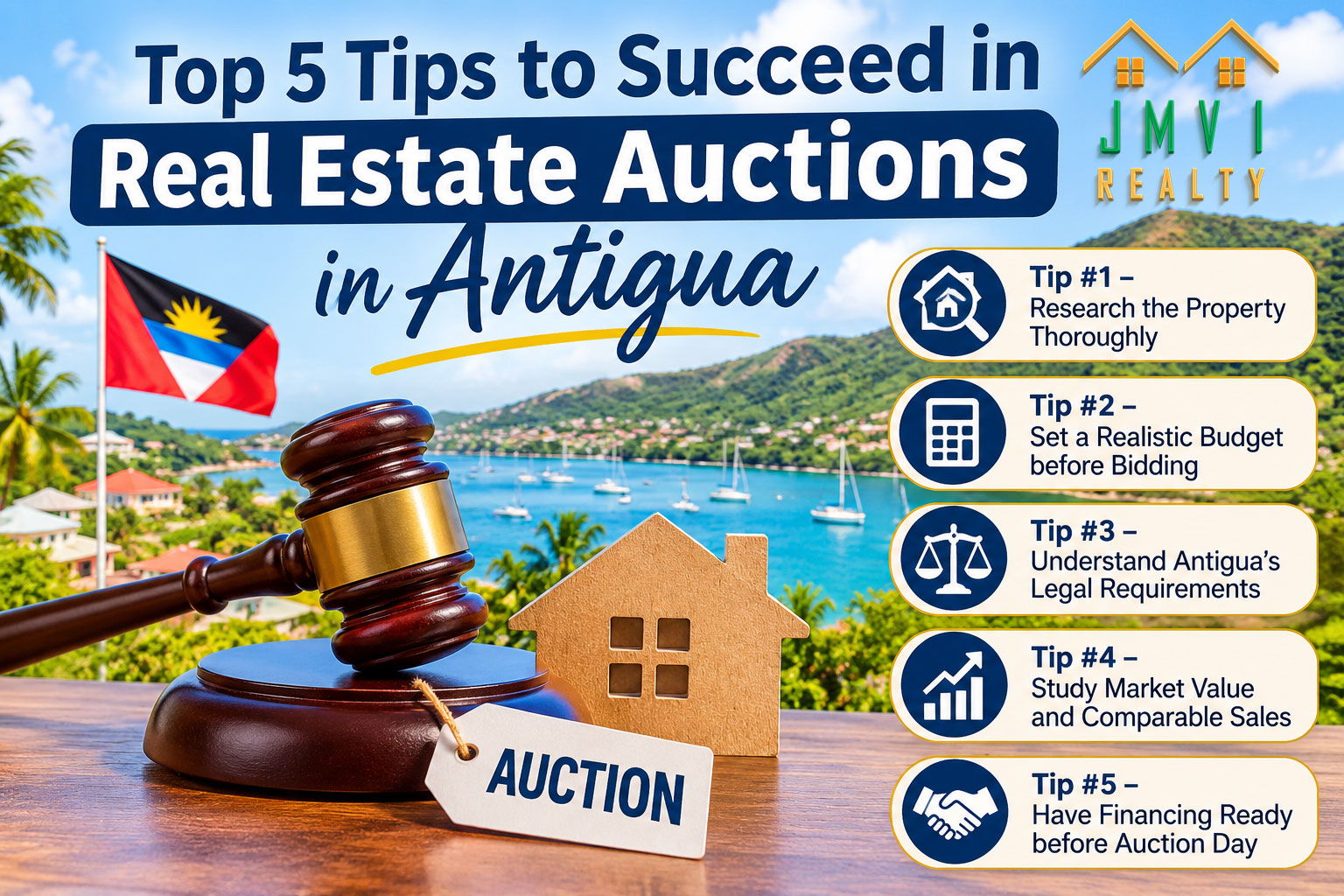
The Caribbean property market continues to attract investors, retirees, second-home buyers, and entrepreneurs looking for opportunities in some of the world’s most desirable destinations. Among these locations, Antigua and Barbuda has become a standout market due to its tourism growth, stable property sector, and strong international demand. Prime property values in key coastal areas have reportedly increased between 8% and 12% over the past year, while demand continues to outpace supply in many sought-after locations.
One area receiving growing attention is real estate auctions in Antigua. Auctions offer a unique pathway to acquiring residential homes, investment properties, waterfront villas, commercial buildings, and vacant land. Unlike traditional real estate transactions that may take months of negotiations, auctions often provide a faster and more transparent purchasing process. Buyers know exactly who they are competing against and can secure properties quickly when properly prepared.
That said, success at property auctions is not about luck. Experienced investors understand that winning bids are usually the result of careful planning, research, budgeting, and legal preparation. Walking into an auction without preparation is similar to sailing through Caribbean waters without checking the weather forecast—you might reach your destination, but the risks increase dramatically.
This guide explores the top 5 tips to succeed in real estate auctions in Antigua, helping buyers maximize opportunities while avoiding costly mistakes.
Understanding How Real Estate Auctions in Antigua Work
Common Types of Property Auctions
Before participating, buyers should understand the auction formats commonly used in Antigua. Auctions may be organized by financial institutions, attorneys, licensed auctioneers, or property owners. Foreclosure auctions are among the most common, where lenders sell properties to recover outstanding debts.
Other auctions involve private owners seeking a quick sale or estate representatives liquidating assets. Some auctions are conducted in person, while online formats have become increasingly popular for international buyers who cannot travel to the island.
Auction Rules Every Buyer Should Know
Every auction has specific terms and conditions. Some properties are sold with a reserve price, meaning the seller has established a minimum acceptable bid. Others may be absolute auctions where the highest bid wins regardless of price.
Most auction properties are sold “as-is.” This means buyers assume responsibility for the property’s condition after purchase. There are typically no guarantees regarding repairs, renovations, or defects. Understanding these rules before bidding is essential to avoid unpleasant surprises after closing.
Tips to succeed in real estate auctions in Antigua
Tip #1 – Research the Property Thoroughly
Verify Ownership and Legal Status
The most successful auction buyers spend more time researching than bidding. Before attending any auction, obtain all available documentation related to the property. Review title records, ownership history, liens, easements, zoning regulations, and any outstanding obligations attached to the property.
Legal due diligence can reveal issues that significantly affect value. A property that appears inexpensive may have unresolved legal disputes, access restrictions, or development limitations. These factors can quickly transform an apparent bargain into an expensive mistake.
Working with a qualified local attorney can help uncover hidden risks. Professional legal guidance is especially valuable for foreign investors unfamiliar with Antigua’s property regulations and transaction procedures.
Read more like this Top 5 Areas to Buy Real Estate in Antigua
Inspect the Property and Location
Whenever possible, inspect the property personally. If access is restricted, gather information through public records, previous listings, aerial imagery, and professional inspections. Understanding the property’s physical condition is critical for estimating renovation costs and future value.
Location analysis is equally important. Evaluate proximity to beaches, marinas, restaurants, airports, and tourism infrastructure. A property in a desirable area such as English Harbour, Jolly Harbour, or Dickenson Bay may offer stronger appreciation and rental potential than a similar property in a less desirable location.
Tip #2 – Set a Realistic Budget before Bidding
Account for Additional Costs
One of the biggest mistakes auction participants make is focusing solely on the winning bid price. The actual acquisition cost often includes legal fees, licensing expenses, taxes/stamp duty, insurance, repairs, and/or closing costs.
Foreign buyers may also need to account for landholding license requirements and associated expenses. These costs can significantly impact overall investment returns if not included in initial calculations.
The following table illustrates common acquisition expenses:
| Cost Category | Typical Consideration |
| Winning Bid | Purchase price at auction |
| Legal Fees | Attorney review and closing |
| Property Inspection | Structural and condition assessments |
| License Fees | Foreign ownership requirements |
| Repairs & Renovations | Immediate improvement costs |
| Insurance | Property protection coverage |
| Closing Costs | Administrative and transaction fees |
Avoid Emotional Bidding
Auctions can be highly emotional environments. Competition often causes buyers to exceed their original budget. This phenomenon, commonly called “auction fever,” can lead to overpaying for a property.
Establish a maximum bid based on thorough analysis and refuse to exceed it regardless of competitive pressure. Successful investors view auctions as business transactions rather than competitions. Walking away from an overpriced property often proves more profitable than winning at any cost.
Tip #3 – Understand Antigua’s Legal Requirements
Foreign Buyer Considerations
Foreign investors can purchase property in Antigua, but specific legal requirements may apply. In many cases, non-citizens must obtain a landholding license before completing ownership transfers. Understanding these requirements before bidding helps avoid delays and compliance issues.
Documentation requirements, government approvals, and transaction timelines should all be reviewed in advance. A property auction moves quickly, but the legal transfer process still requires careful attention.
Working with Local Professionals
Local expertise can significantly improve your chances of success. Consider assembling a professional team that includes:
- A real estate attorney
- A licensed real estate agent
- A property inspector
- A financial advisor or lender
These professionals can provide insights that are difficult to obtain independently. Their guidance may identify opportunities or risks that affect investment performance for years after the purchase.
Tip #4 – Study Market Value and Comparable Sales
Identify Genuine Bargains
Not every auction property represents a discount. Some auctioned properties sell near market value or even above it due to strong competition. The key is understanding local market conditions before bidding.
Research recent comparable sales in the same neighbourhood. Analyze factors such as square footage, condition, lot size, waterfront access, and rental performance. This information helps establish realistic value ranges and prevents overbidding.
Current market data indicates continued strength in many Antigua property segments due to limited inventory and ongoing international demand. Understanding these broader trends allows buyers to make more informed decisions.
Read more on Is Now the Right Time to Buy Property Antigua
Evaluate Rental and Resale Potential
A successful auction purchase should not only look attractive today but also perform well in the future. Evaluate potential rental income, occupancy trends, tourism demand, and resale liquidity.
Properties located in high-demand tourism areas often generate stronger rental returns and attract a broader buyer pool when it is time to sell. Well-positioned beachfront and marina properties frequently benefit from both lifestyle appeal and investment demand.
Browse Well-positioned beachfront and marina properties
Tip #5 – Have Financing Ready before Auction Day
Cash vs. Mortgage Purchases
Many auction transactions require rapid completion. Buyers who already have financing approved gain a significant advantage. Waiting until after the auction to arrange financing can create unnecessary complications and may jeopardize the purchase.
Cash buyers often enjoy greater flexibility and faster closings. However, mortgage financing remains an option for qualified buyers depending on lender requirements and property eligibility.
The key principle is simple: know exactly how you will fund the purchase before placing a bid.
Preparing Deposit Requirements
Auction organizers typically require deposits immediately after a successful bid. Deposit amounts vary but are often a percentage of the final purchase price.
Prepare these funds in advance and understand payment methods accepted by the auctioneer. Administrative delays or funding issues can result in penalties or loss of bidding privileges.
Common Mistakes Buyers Make at Real Estate Auctions
Several recurring mistakes undermine auction success. The most common include insufficient research, unrealistic budgeting, failure to inspect properties, ignoring legal complexities, and emotional bidding.
Another frequent mistake involves underestimating renovation costs. A distressed property may require far more work than initially anticipated. Professional inspections and contractor estimates can provide realistic expectations before committing to a purchase.
Many first-time auction buyers also assume that every property is a bargain. In reality, successful investing depends on disciplined analysis rather than optimistic assumptions.
Read more on 10 Mistakes to Avoid When Buying Property in Antigua
Comparing Auction Purchases vs Traditional Purchases
| Factor | Auction Purchase | Traditional Purchase |
| Speed | Fast transaction process | Often slower |
| Negotiation | Limited | Extensive |
| Property Condition | Usually sold as-is | Negotiable repairs |
| Competition | Public bidding | Private offers |
| Due Diligence Time | Often limited | Usually longer |
| Price Discovery | Immediate market-driven pricing | Negotiated pricing |
Understanding these differences helps buyers determine whether auctions align with their investment goals and risk tolerance.
Read more like this Property Auctions Best Way to Find Caribbean Real Estate Deals
Why Antigua Remains an Attractive Property Market
Antigua continues to attract global investors due to its natural beauty, expanding tourism sector, stable investment environment, and limited supply of prime real estate. Industry reports suggest strong demand for quality properties, supported by growing visitor arrivals and increasing international interest. Prime properties continue to command strong attention from buyers seeking both lifestyle and investment benefits.
The island’s combination of white-sand beaches, world-class sailing facilities, luxury developments, and year-round tourism creates a compelling environment for real estate investment. For buyers willing to conduct thorough due diligence, auctions can provide access to opportunities that may not be available through traditional channels.
Conclusion
Success in real estate auctions in Antigua comes down to preparation rather than luck. Buyers who thoroughly research properties, establish firm budgets, understand legal requirements, analyze market values, and secure financing before auction day place themselves in the strongest position to succeed.
The Antigua property market continues to attract investors from around the world, supported by tourism growth, limited inventory, and strong international demand. Auctions offer a unique pathway into this market, but only for those willing to approach the process strategically.
Whether you’re pursuing a beachfront villa, an investment property, or a future retirement home, following these five tips can help you navigate Antigua’s auction landscape with confidence and make informed decisions that support your long-term real estate goals.
FAQs on Real Estate Auctions in Antigua
Can foreigners buy auction properties in Antigua?
Yes. Foreign buyers can purchase auction properties in Antigua, although specific legal requirements and licensing procedures may apply depending on the property type and ownership structure.
Are auction properties always cheaper than traditional listings?
No. While auctions can present bargains, some properties sell at or above market value due to strong competition and demand.
What is the biggest risk when buying at auction?
The biggest risk is insufficient due diligence. Buyers who fail to investigate legal, structural, or financial issues may face unexpected costs after purchase.
How much deposit is usually required at an auction?
Deposit requirements vary by auction organizer but are commonly a percentage of the winning bid and are often due immediately after the auction.
Is financing available for auction purchases in Antigua?
Yes. Financing may be available through lenders, but buyers should secure approval before participating since auction transactions often require quick completion.